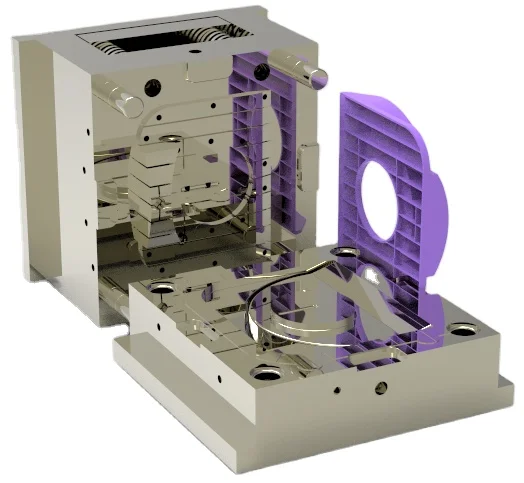
In the world of manufacturing, where efficiency and precision are paramount, few processes are as critical as Injection Mould. While many industries rely on it, the true magic of this process remains largely invisible to the everyday observer. In fact, injection moulding is an invisible force behind the creation of an astounding range of products, from everyday consumer goods to complex industrial components.
Let’s take a moment to look behind the curtain of this fascinating technique and uncover how it shapes the modern world in ways that often go unnoticed.
What is Injection Moulding?
Injection moulding is a manufacturing process used to produce parts by injecting molten material into a mould. The material, typically a type of plastic or metal, is heated to a liquid form and injected under high pressure into a mould cavity, where it cools and solidifies into a specific shape. This process is renowned for its precision, ability to create highly complex shapes, and remarkable scalability.
The process starts with raw material in pellet form, which is melted in an injection moulding machine. This liquid is then injected into a carefully designed mould that corresponds to the final part. Once it cools, the mould opens, and the finished part is ejected. These parts can be anything from tiny connectors in electronic devices to large components in automotive engineering.
The History and Evolution of Injection Moulding
The roots of injection moulding trace back to the early 19th century when John Wesley Hyatt invented the first plastic injection machine in 1872. Hyatt’s invention was initially designed to mass-produce billiard balls, replacing the ivory previously used in their creation. However, it didn’t take long for the world to recognize the vast potential of this technology. By the 1950s and 1960s, advancements in material science and machine design led to the widespread industrial adoption of injection moulding, especially in the burgeoning plastics industry.
Today, injection moulding has evolved into a sophisticated Overmolding and highly automated process. The development of more durable materials, faster processing times, and the integration of cutting-edge technology like robotics and AI has allowed injection moulding to play a vital role in industries ranging from automotive to medical, consumer electronics to aerospace.
Materials and Moulds: The Heart of Precision
While plastic is the most common material used in injection moulding, it’s far from the only one. Materials such as metals, silicone, and even ceramics are used in specific applications. The versatility of injection moulding comes from the wide variety of materials that can be processed, making it suitable for creating parts with unique properties like heat resistance, strength, flexibility, and more.
However, the material alone isn’t enough. The mould itself is crucial. A mould is essentially a negative of the desired part, and it must be designed with great attention to detail. The mould’s quality dictates the quality of the final product, including its strength, surface finish, and dimensional accuracy. Modern moulds are typically made from steel or aluminum and are designed using 3D CAD (computer-aided design) software. The precision in mould design is a testament to the level of craftsmanship involved in this manufacturing process.
The Advantages of Injection Moulding
The benefits of injection moulding make it the go-to method for producing high volumes of precise parts:
- Precision and Accuracy: Injection moulding is known for its ability to create parts with high dimensional accuracy, often to tolerances of just a fraction of a millimeter. This is crucial in industries like aerospace and electronics, where even the slightest deviation can lead to failure.
- Scalability: Once the mould is created, parts can be produced at an incredibly fast rate. This makes injection moulding ideal for large-scale production runs.
- Material Efficiency: The process creates very little waste, as the material is injected directly into the mould, and any excess material is recycled and reused.
- Complexity in Design: Injection moulding can produce parts with intricate geometries, undercuts, and even embedded features like threads and logos. This is something that other manufacturing methods struggle to achieve at the same level of consistency.
- Cost-Effective for Mass Production: While the initial investment in designing the mould can be expensive, once it’s made, producing each subsequent part becomes cost-effective. This is why industries that require large quantities of identical parts rely so heavily on injection moulding.
The Technological Revolution in Injection Moulding
The role of technology in enhancing injection moulding processes cannot be overstated. Today, manufacturers are integrating advanced systems to increase efficiency, reduce cycle time, and improve the quality of parts.
- 3D Printing for Prototyping: Before creating expensive steel moulds, manufacturers often use 3D printing to prototype the mould design. This enables rapid testing and iteration, reducing the overall time and cost to market.
- Robotics and Automation: Robotic arms are increasingly being used to handle parts after they’ve been injected and ejected from the mould. Automation has also led to more consistent quality control, fewer human errors, and faster production speeds.
- Artificial Intelligence (AI): AI algorithms are now being implemented to monitor the moulding process in real time. These systems can predict defects, optimize cycle times, and make adjustments on the fly, leading to greater efficiency and higher-quality products.
- Smart Moulding Machines: The machines themselves have evolved to be smarter, incorporating sensors and data analytics. These smart machines can track energy usage, detect mechanical wear, and even predict when maintenance is required, further reducing downtime.
The Environmental Considerations
As the world becomes increasingly aware of the environmental challenges we face, injection moulding is evolving to address sustainability concerns. Companies are experimenting with biodegradable and recyclable materials, while also developing energy-efficient moulding machines. Additionally, efforts are being made to reduce material waste by refining the injection process and reusing sprues (excess material).
Moreover, industries like the automotive sector are leveraging injection moulding to create lightweight, fuel-efficient parts. This is a great example of how this technology not only drives manufacturing but also contributes to global sustainability efforts.
Future Trends in Injection Moulding
The future of injection moulding is bright, with new possibilities constantly emerging. Here are a few trends that are likely to define the next generation of the technology:
- Increased Use of Hybrid Materials: The rise of hybrid materials, which combine the strengths of plastics, metals, and other composites, is likely to lead to more innovative products. These materials can provide properties such as greater strength-to-weight ratios or enhanced resistance to extreme environments.
- Micro Injection Moulding: As devices become smaller, micro injection moulding is gaining attention. This technique involves creating ultra-small components, often on a microscopic scale. It’s particularly valuable in the medical and electronics industries, where precision is critical.
- Sustainable Manufacturing Practices: Expect a growing shift towards the use of environmentally friendly materials and energy-efficient moulding machines, driven by both consumer demand and regulatory requirements.
- Smart Moulding Systems: The integration of machine learning, AI, and the Internet of Things (IoT) will lead to even smarter, more autonomous injection moulding systems that can adapt to changing conditions and optimize production in real-time.
Conclusion: The Quiet Champion of Manufacturing
While many industries are working hard to keep up with ever-evolving technology, injection moulding remains a timeless, indispensable process. It is a perfect example of how the manufacturing world, with its blend of innovation, efficiency, and creativity, continually adapts to meet the needs of modern society.
From its humble origins in creating billiard balls to producing cutting-edge components for the aerospace industry, injection moulding has earned its place at the heart of countless industries. It’s the quiet champion of manufacturing, working behind the scenes to shape the objects that fill our everyday lives.